



Gotlands Museum
Wenn es kein Logo gibt, wird diese Spalte einfach leer gelassen. Das Bild oben bitte löschen.
(Dieser Text wird nicht dargestellt.)
Strandgatan 14
Visby
Sweden
Telefon: +46 (0)498 29 27 00
Opening hours:
From October to April: Daily 11:00 AM – 4:00 PM
From May to September: Daily 10:00 AM – 6:00 PM
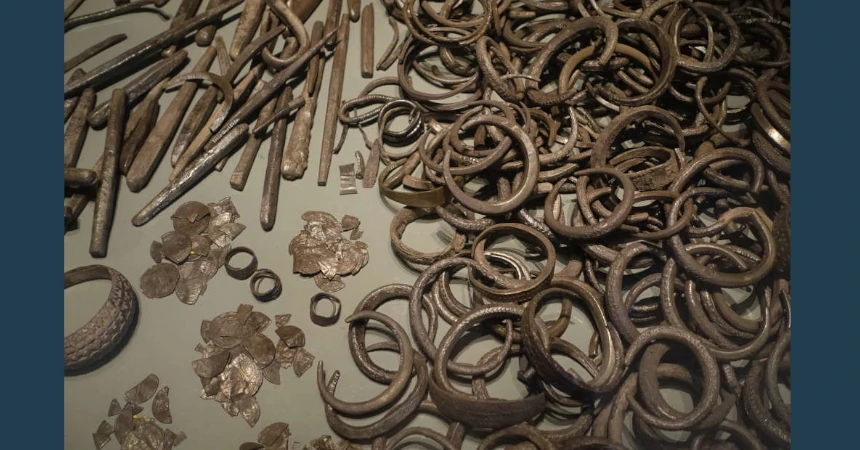 Foto: KW.
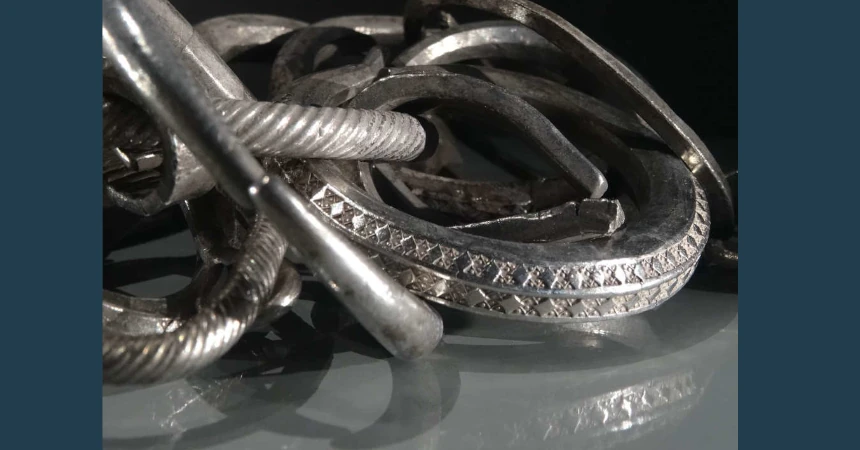 Foto: KW.
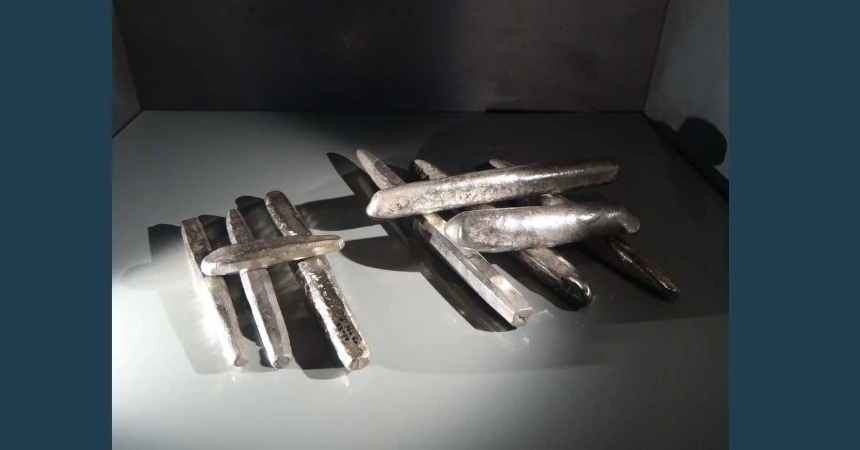 Foto: KW.
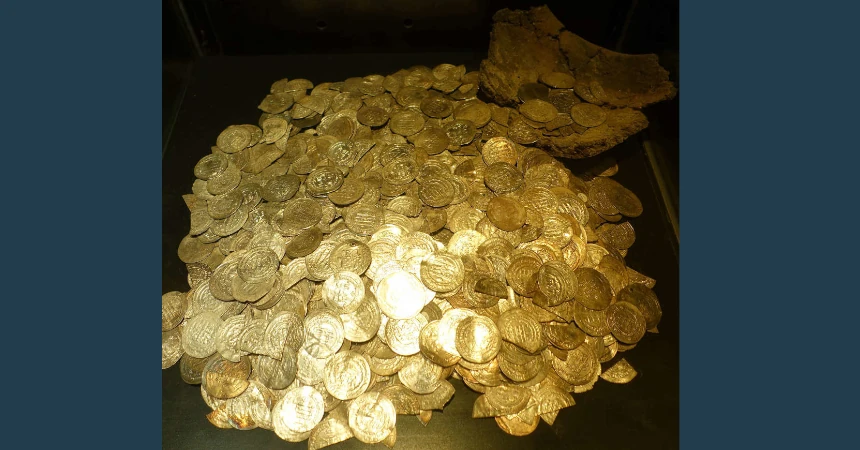 Foto: KW.
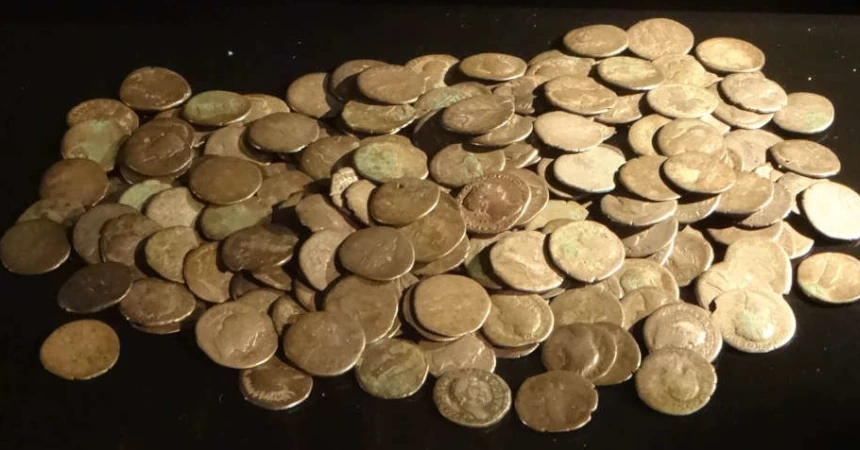 Foto: KW.
 Foto: KW.
 Foto: KW.
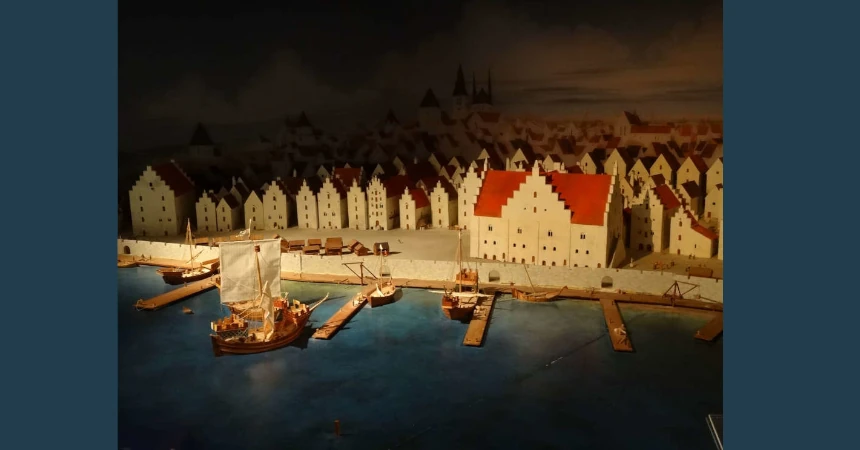 Foto: KW.
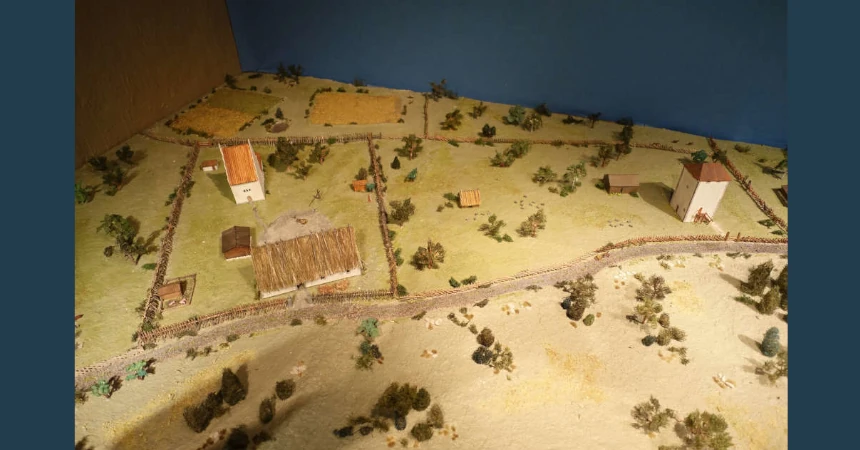 Foto: KW.
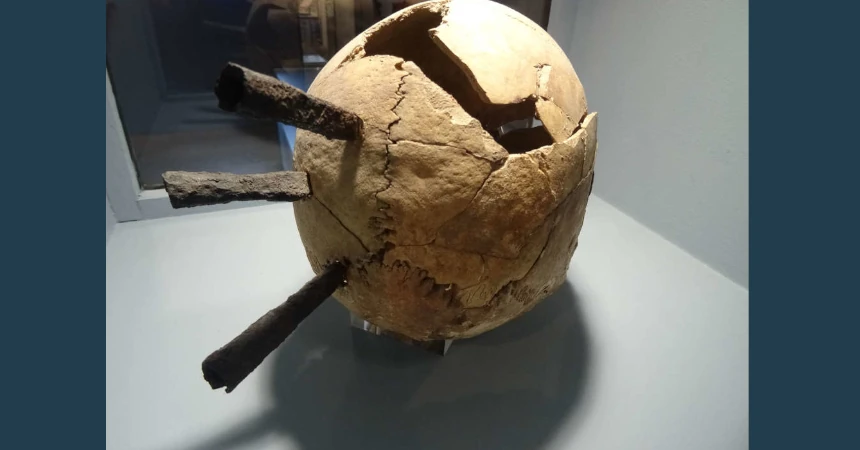 Foto: KW.
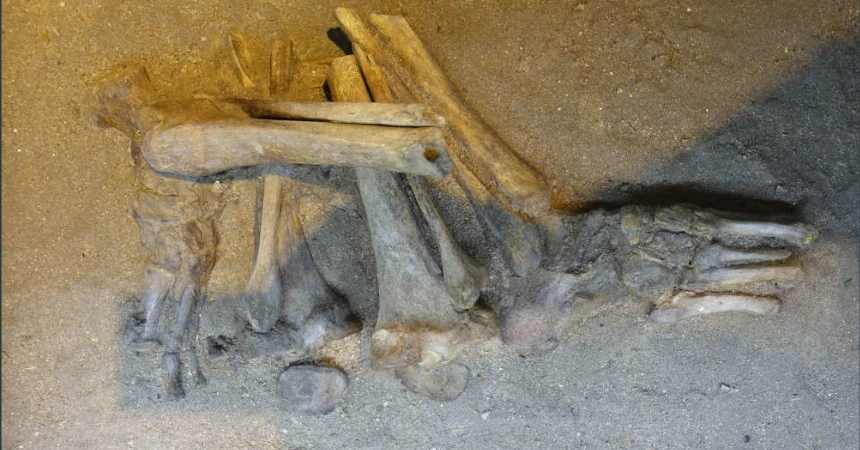 Foto: KW.
The nearest treasure island is just about 600 miles from the Künker auction house in Osnabrück! We are talking about the Swedish island of Gotland, which in the 8th century AD developed into a trading hub linking northern Europe with the urban centers of the Middle East. Beeswax, wood, and animal skins were not only highly popular in Miklagard – as the northerners called the city of Constantinople. And as Muslim armies and fleets blocked traditional trade routes, goods were exchanged between northern Europe and Asia on Russian rivers, which were easily accessible from Scandinavia via the Baltic Sea. In this process, Gotland became an important trading center for all kinds of goods.
And there is more: Gotland was also home to many manufacturers of goods that were urgently needed by seafarers. It was here that tar and rope were produced, beer brewed and dried cod prepared. Of course, the people of Gotland were not the only ones to produce these goods – but it was the only island without feudal lords, who were in control of all other places in central and northern Europe at the time. So, on Gotland, nobody took away the farmers’ surplus. And nobody prevented them from trading in their own goods. That is why many enterprising peasants loaded up a ship with their goods, hired a crew and took to the sea. They sold whatever they produced. And, perhaps, a different opportunity presented itself. Although the Vikings were not as bad as their reputation, they certainly did not mind “increasing their income” whenever they saw an opportunity.
When they returned, their ships brought large quantities of silver to Gotland; and a farmer had no use for so much silver in his daily life. Gotland was a subsistence economy where people produced themselves what they needed to live. Therefore, the silver brought back from the last trip was buried in the ground – and that is why these lost treasures can still be found in Gotland’s soil today.
Most treasures were buried between the 9th and 11th centuries. At first they were distributed evenly over the whole island, and from 1075 they were more concentrated along the coast.
Some people do not like archaeological hoards to be called treasures. In the case of Gotland, however, you simply cannot do without this term. The island has a size of just three thousand square kilometers and hoards containing nearly 180,000 coins have been found to date. And it is quite possible that this figure is already out of date, as new hoards are being found all the time.
A Child of the Early National Movement
While most of the early hoards found on Gotland are on display in the Gold Room of the Swedish History Museum in Stockholm, all new hoards are brought to the Gotland Museum, which was founded in 1875 on the initiative of Per Magnus Arvid Säve.
The history of this museum is quite typical for a local museum. It was established at a time when, after the end of aristocratic rule, civil nation-states were being formed. At that time, everyone was busy thinking about their identity, and a crucial part of this identity was, of course, one’s past.
Therefore, Per Magnus Arvid Säve, the son of a pastor, first studied classical studies in Uppsala. But instead of studying the Iliad or Roman buildings, he applied what he had learned to the past of his own region: Säve studied the old language of Gotland, collected the island’s myths and all the ancient objects from the region. The Swedish state created the position of curator of antiquities on Gotland for this enthusiastic collector. From then on, he was allowed to do on behalf of the state what he had previously done for himself. Säve became the center of a group of Gotland citizens. Together with them, he founded a historical society, and then the Gotland Museum, which was initially based on the founders’ private collections. Today the museum collects everything that illustrates Gotland’s history and is in need of museum care. This includes coin hoards, a topic that several rooms of the museum are dedicated to.
The Spillings Hoard
The Spillings Hoard is probably the most impressive exhibit in the Gotland Museum – it is the largest silver treasure from the Viking period ever found anywhere in the world. It weighs a staggering 67 kilos and contains 14,000 coins, most of them Islamic. As Islamic dirhems can be precisely dated, we know when the treasure was buried, after 870/71.
67 kilos – the sheer amount of silver in this hoard is virtually overwhelming for visitors. We would like to give you an idea of how much the hoard was worth at the time it was buried: with this money, Gotland could have paid all its taxes to the Swedish king for five years.
The treasure was almost found live while a camera crew was filming. At the time, the Swedish broadcaster TV4 was making a documentary about Gotland’s coin hoards. They had rented a metal detector and were assisted by archaeologist Jonas Ström. Incidentally, the internationally renowned numismatist Kenneth Jonsson was also on site. They recommended that the TV team film at the Spillings farm, as coins had turned up there time and time again.
When the team had finished filming and left the farm, the scholars decided to take the metal detector and check out the site for themselves – just 20 minutes later, they heard the signal telling them that they had found the first of what turned out to be three hoards. A few hours later, they found a second hoard. That was too much for the detector, says Jonas Ström: “The display said ‘overload’ and then the device just turned off.” An archaeological excavation was carried out immediately, which is why the Spillings Hoard was unearthed by a team of experts complying with archaeological standards.
In addition to the two silver treasures, another hoard of 20 kilos of bronze was discovered later. It is of little interest to numismatists as it contained no coins. For archaeologists, on the other hand, this third hoard is truly unique: after all, there are far fewer bronze hoards than silver hoards on Gotland.
Stavar’s Treasure
My personal favorite is the story of Stavar’s Treasure, and to tell it, we have to go back to 1880. At the time, a somewhat drunk Gotlander called Göran staggered out of the local pub. All of a sudden – as he would tell again and again – a Viking covered in blood appeared in front of him holding a large axe. Göran was frightened, but the ghost calmed him down: It said that it was his ancestor named Stavar. He died fighting against the Norwegian Viking Erik Jarl and did not live to tell his children about the secret of his treasure. So now he wants to show it to Göran. You can imagine that Göran was sobered up in the blink of an eye. However, he was cautious to proceed. He did not want to have Stavar’s treasure, because he believed that it was tainted with evil. So he politely declined. The ghost called Stavar praised him for his decision, gave him some coins from the hoard and promised to try again with Göran’s descendants.
We can well imagine that Göran’s descendants cursed him for his modesty for a long time to come. And when they sold the Stavgard estate in the 1950s, they included a clause stating that they had the right to claim Stavar’s treasure if it ever turned up.
It was only in 1975 that the treasure was found by playing schoolchildren. But was this hoard really Stavar’s treasure? We may well doubt that. There are so many treasures buried on Gotland that it is quite likely that one of them will be found on your land.
The End of Gotland’s Wealth
Just as impressive as the large treasures are the testimonies to the Battle of Visby in 1361. To us, this battle is of importance because it put an end to the many coin hoards.
Let us remember: the reason why Gotland’s farmers became rich was that there were no feudal lords on the island. In this way, Gotland’s farmers put themselves in a position of potential competition with the merchants of Visby, the main city of Gotland. After all, the merchants would have liked to unite all the island’s trade business behind their city walls.
When the Danish king Valdemar Atterdag tried to take control of Gotland, he attacked Visby. But the townspeople barricaded themselves behind the city walls and let the farmers fight the battle. Farmers fighting the Danish king’s soldiers – no prizes for guessing who won the battle. Our imagination is stimulated by the many exhibits in the Gotland Museum. There are the remains of Gotland’s farmers, pierced by arrows, with their limbs cut off and their skulls split open. While half of the male population was slaughtered outside Visby, the citizens watched and waited. They negotiated an agreement with Valdemar Atterdag, while his soldiers plundered and burned down the farmsteads in the countryside. Visby’s merchants thought that this would get rid of their competitors.
But they forgot about the fact that goods need to be produced before they can be sold and traded. Once those who produce them are dead, there is nothing left to make a profit on. And this is how Gotland lost its position as a trading hub and important economic center in the Baltic Sea. It should also be mentioned that by this time the trade routes had begun to shift again.