

Archäologische Staatssammlung
Wenn es kein Logo gibt, wird diese Spalte einfach leer gelassen. Das Bild oben bitte löschen.
(Dieser Text wird nicht dargestellt.)
Lerchenfeldstr. 2
80538 Munich
Germany
Department Numismatics
Dr. Bernward Ziegaus
Tel: +49 (0)89 12599691-22
Opening Hours:
Tue – Wed/Fri–Sat 10:00–17:00
Thu/Sun 10:00–19:00
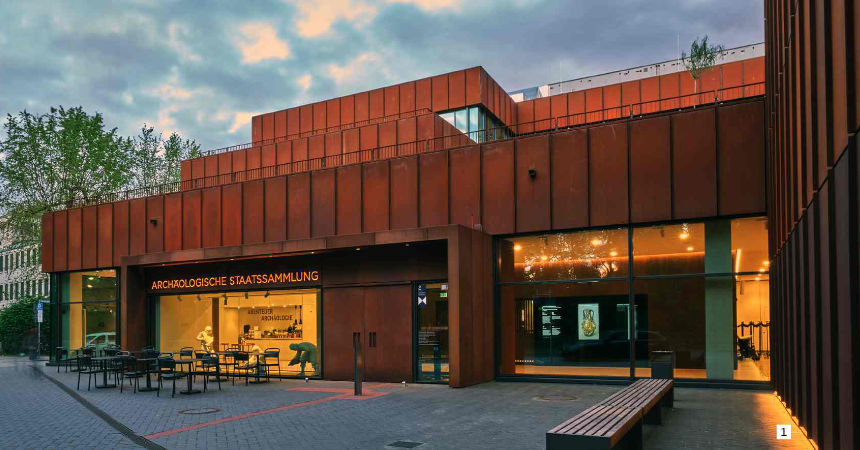
© Archäologische Staatssammlung
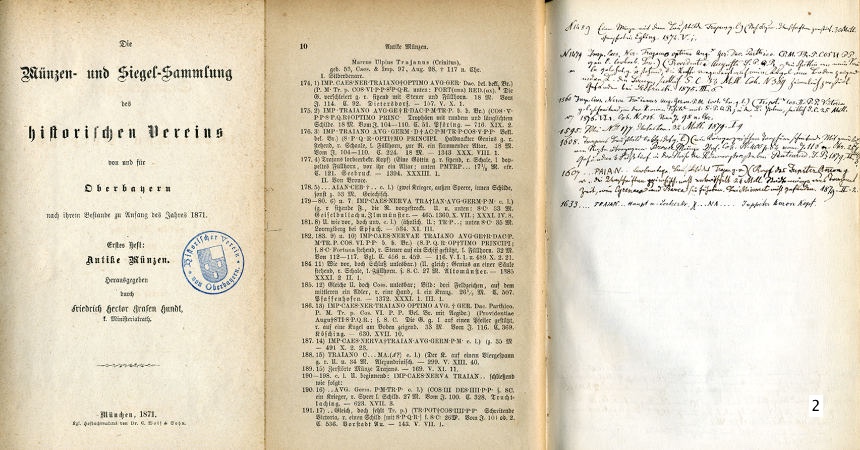
Among the oldest coins in the Archäologische Staatssammlung are over 1,600 Roman coins belonging to the Historical Society of Upper Bavaria. These coins were donated by members of the society since its founding in 1837 and collected chronologically according to the emperors. As early as 1871, a catalog of the society’s holdings was published by Ministerial Councilor Friedrich Hector Count Hundt (1809–1881), which often included the findspots of the coins. In the years following the catalog’s publication, the society’s personal copy was continually supplemented with handwritten annotations detailing further donations, thus continuing the inventory in the publication. However, the collection fell into disarray during the Second World War, and some coins were lost. A reorganization and re-identification of the coins finally took place in the early 1980s, before the entire collection was transferred to the Prähistorische Staatssammlung (now Archäologische Staatssammlung) for permanent safekeeping in 1986.
Since the 1960s, under the direction of Hans-Jörg Kellner (1920–2015), the Prähistorische Staatssammlung increasingly acquired coins from archaeological excavations of Roman military camps and civilian settlements. After Kellner’s retirement in 1984, the identification of Roman coins was initially continued by the head of the Medieval Studies department. In 1991, a separate Numismatics department was established. It is currently staffed by a curator, who is supported by volunteers and interns.
The Archäologische Staatssammlung receives regular financial support from its Friends Association, which has existed since 1973, for the acquisition of archaeological finds. These include coins of outstanding importance to Bavarian history. Donations or bequests are rare, so acquisitions can only be made with special funds.
Inventory and tasks
The department currently houses approximately 6,000 Celtic and over 25,000 Roman coins, as well as a smaller collection of medieval and early modern coins. A selection of the coin hoards is presented on the online portal Bavaricon under the keyword “Archäologische Staatssammlung Münzschatz”.
The presentation always focuses on examining coins in their archaeological context, which is why collaboration with archaeologists and restorers is fundamental to the publication in order to obtain a maximum of information on their storage in the ground – whether through accidental loss or intentional concealment.
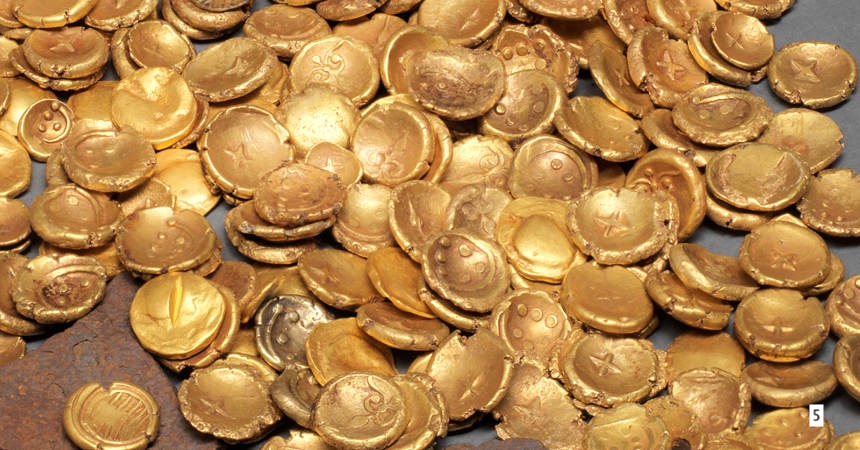
The spectacular discoveries of Celtic coin hoards in Bavaria in the 1980s and 90s led to a significant increase in the collection. They also offered the opportunity to examine larger coin series using die analysis. Furthermore, the material could be investigated from specific scientific perspectives, such as the metallurgical composition of the coins or the reasons for their concealment and the origin of the coin gold.
Further research focuses include the recording of Celtic coin-making tools and the digital inventory of the institute’s own, as yet unidentified, coin holdings. In addition, the institute documents and appraises coin finds and hoards for the Bavarian State Office for the Preservation of Monuments, which were discovered or reported after the introduction of the treasure trove law in 2023.
Exhibition
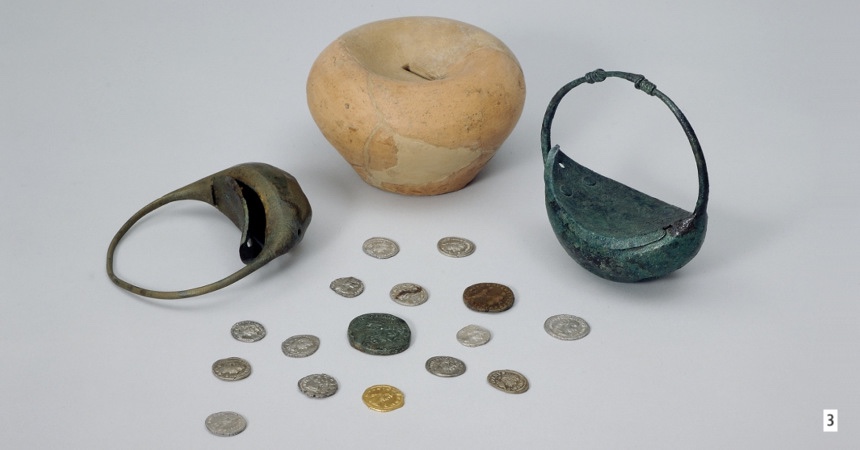
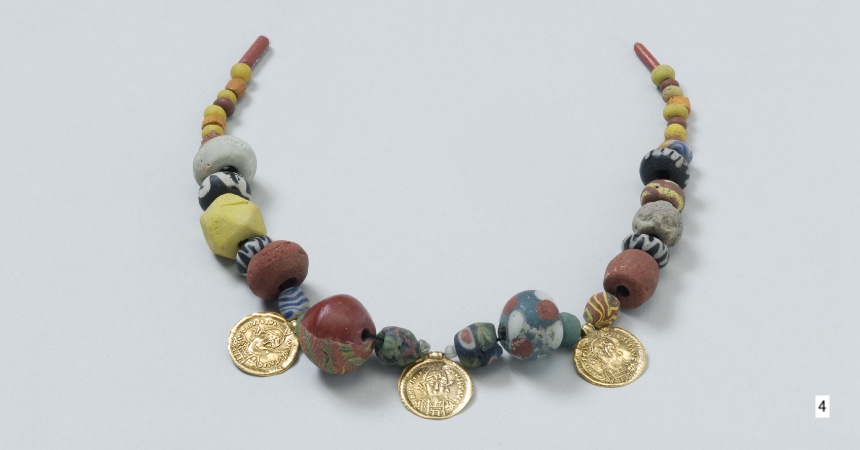
The coin collection is presented to visitors in various rooms of the newly designed (2024) permanent exhibition of the Archäologische Staatssammlung, organized thematically. These themes include: coins as tools for dating archaeological finds, coin images as primary sources for historical events, the secondary use of coins as jewelry and grave goods, and coin hoards as a source of information on monetary circulation and as a tool for dating medieval and early modern pottery. In keeping with the collection’s focus, Celtic and Roman coin hoards are presented, as well as those combined with tools or their vessels. The Roman nominal system and ancient forgeries are also explained.
Projects
Excavations by the Roman-Germanic Commission of Frankfurt/Main at the Celtic oppidum of Manching since the early 1950s have yielded hundreds of Celtic coins and several coin hoards. These finds underscore the central importance of this Celtic metropolis as a hub for trade and monetary transactions in the 2nd–1st centuries BC. Among the most significant Celtic coin finds from southern Germany is the hoard from Großbissendorf / Upper Palatinate, consisting of so called Regenbogenschüsselchen and Boian gold coins.
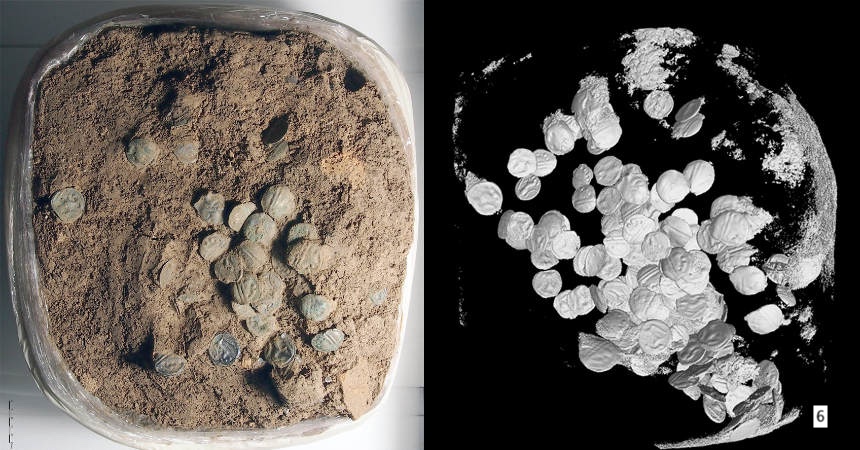
Among the most interesting acquisitions of recent years is a hoard of over 260 Celtic Sequani potins, still encased in a block of earth, which was recovered during excavations in Lower Franconia in 2019, pre-examined using 3D computed tomography, and is now being uncovered layer by layer.
For the DFG projects “ ClaReNet – Classifications and Representations for Networks” (2022–2024) and the follow-up project “De retibus nummorum” – The networking of the late Celtic world using the example of the coinage economy (2025–2027) Celtic gold and silver coins were made available for an image recognition procedure using artificial intelligence.
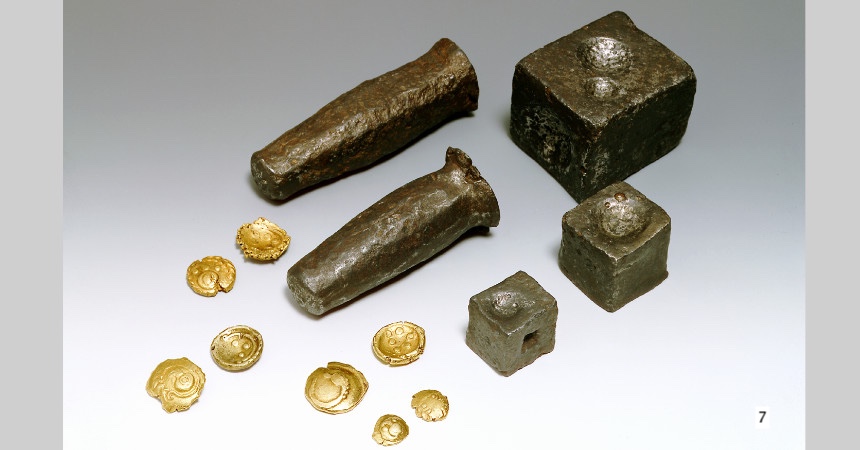
One of the curator’s main areas of interest is the study of Celtic coinage. This includes examining ceramic melting plates for traces of precious metals, documenting semi-finished coins and melting waste, but above all, documenting specialized coin-making tools. These tools, used in the serial production of coins, provide deeper insights into the working techniques of a Celtic mint. The Archäologische Staatssammlung thus possesses not only an enormous collection of Celtic coins but also the largest collection of Celtic coin-making tools, both originals and replicas, in Europe.
Image captions:
01 Archäologische Staatssammlung (Munich) 2024 // 02 Endpaper and double page from the inventory catalog of the coin and seal collection of the Historical Society of Upper Bavaria (1871) // 03 Roman coin purse bracelets and money box with coins from fort and settlement sites in Pförring and Eining (Upper and Lower Bavaria) // 04 Necklace of pearls and gold strikes of solidi of Emperor Justinian from a grave in Munich-Aubing (Upper Bavaria) // 05 Coin hoard from Großbissendorf in the Upper Palatinate // 06 Celtic coin hoard recovered in a block of earth from Oberpleichfeld (Lower Franconia) and CT scan showing the interior of the still unexcavated block // 07 Celtic coin dies from Niederaltheim (Bavarian Swabia) and Regenbogenschüsselchen from various find sites in Upper Bavaria
All texts and images © Archäologische Staatssammlung