





Museu do Dinheiro

Wenn es kein Logo gibt, wird diese Spalte einfach leer gelassen. Das Bild oben bitte löschen.
(Dieser Text wird nicht dargestellt.)
Largo de São Julião,
1100-150 Lisboa
Portugal
Tel: +35 (1) 213 213 240
Opening hours:
Wed-Sun 10:00 AM– 6:00 PM (last entry 5:30 PM)
 Fotos: KW.
 Fotos: KW.
 Fotos: KW.
 Fotos: KW.
 Fotos: KW.
 Fotos: KW.
 Fotos: KW.
 Fotos: KW.
 Fotos: KW.
 Fotos: KW.
 Fotos: KW.
 Fotos: KW.
by Ursula Kampmann
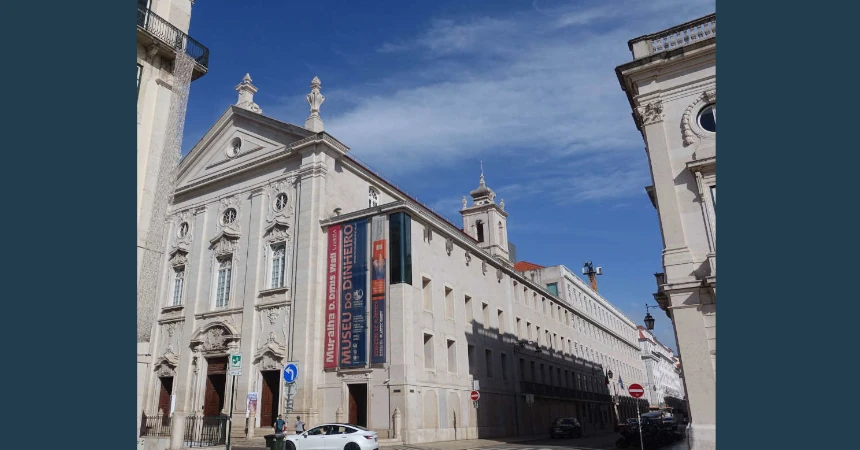
Actually, we just wanted to get away from the crazy tourist crowds flooding the Praça do Comércio from the nearby cruise ship dock. So there we were, a little annoyed, at the Praça do Municipio, trying to figure out what to do on this beautiful day. Then my eyes fell on a large sign on the corner of a church that read “Museu do Dinheiro”. I have not the slightest idea of the Portuguese language, but I certainly recognize the word “money” – even if it is written in Portuguese. Of course, we immediately decided to visit the museum. It provided us with two hours of wonderful entertainment.
How to Recycle a Baroque Church
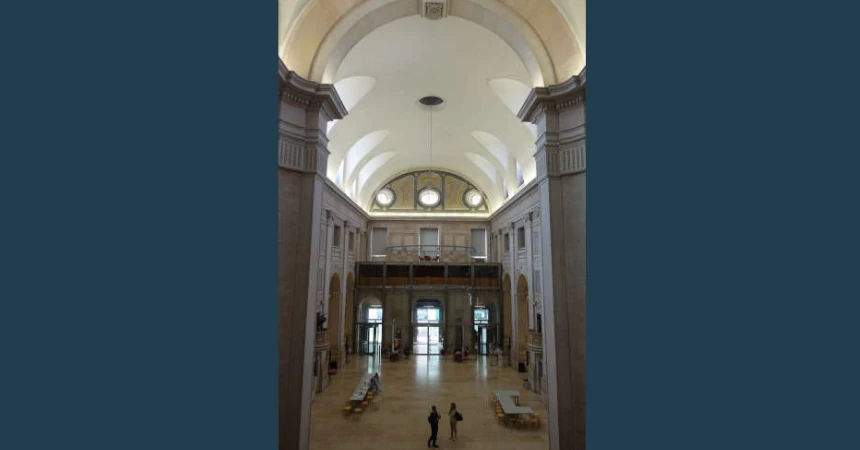
Instead of constructing a new building, the Portuguese central bank decided to transform the Church of S. Julião into a museum. The imposing church of little art-historical interest was first built after the earthquake of 1755 and has been remodeled several times. As the number of active religious orders in Lisbon has been decreasing since the 19th century, the church decided to deconsecrate the building and sell it. They quickly found a buyer – the Banco de Portugal was interested. It wanted to demolish the church to build its new headquarters on the centrally located lot. Thus, the entire building changed hands for 10 million escudos on 7 June 1933. But the project failed because they did not get an official building permit. So the central bank had to come up with a plan for what to do with the huge church.
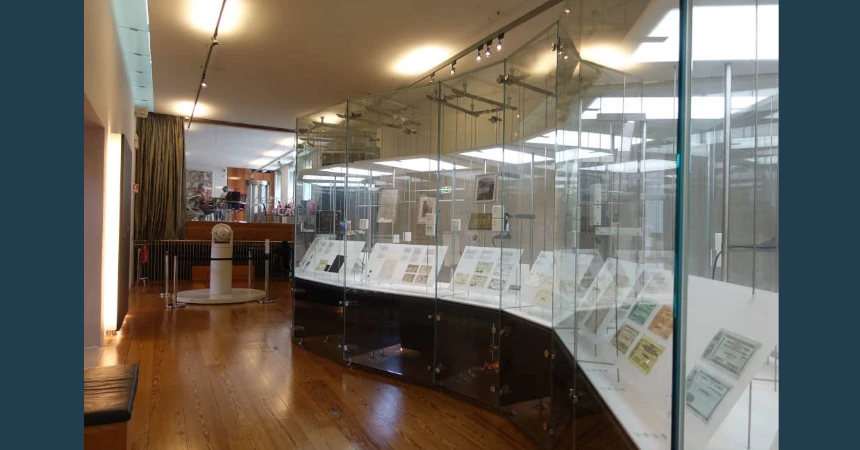
At the beginning of the millennium, they decided to turn it into a museum. They found an innovative scenography studio that saw the architectural problems as a welcome challenge and designed an attractive money museum, which opened its doors on 19 April 2016. Since then, Lisbon has had a numismatic attraction that is even free of charge. Nevertheless, it is a good idea to go to the “ticket office”, where you will get a free ticket to use the various knowledge stations. Particularly popular are the quizzes that can be found throughout the museum that visitors can use to test their numismatic, economic and historical knowledge. It’s a really fun idea that you shouldn’t miss.
State-of-the-Art Technology and Amazing Exhibits
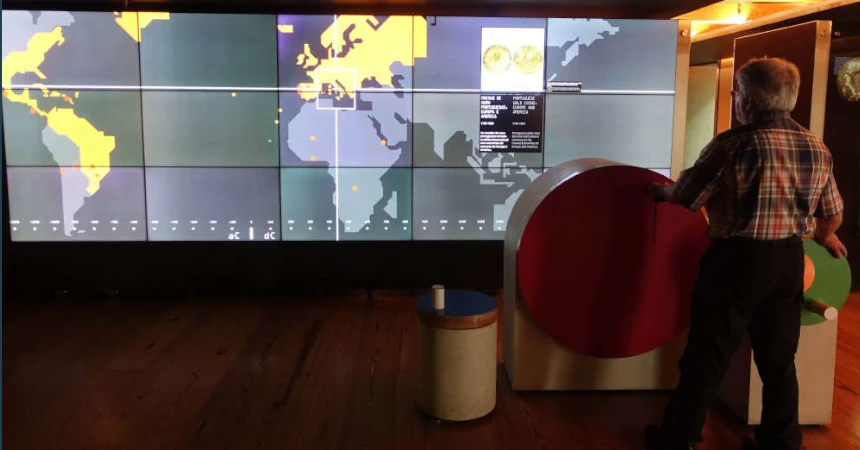
This brings us to a typical characteristic of the Museu do Dinheiro: it was not built for numismatists, but for the general public. The museum aims to explain how money works and how exciting the history of money is. And there are many interactive stations to do just that. At the very beginning, there is a computer in the shape of a human that asks visitors to trade with it. A few rooms later, an interactive map encourages visitors to put the exhibits in their geographical and historical context.
Classical Numismatics at its Finest
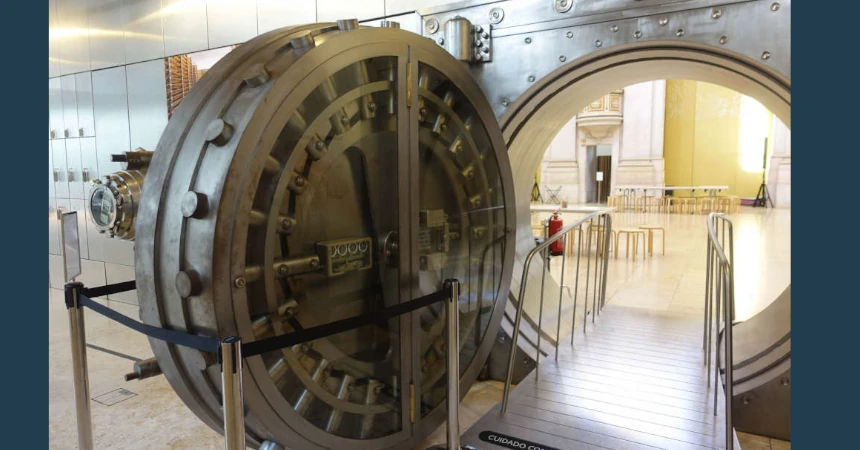
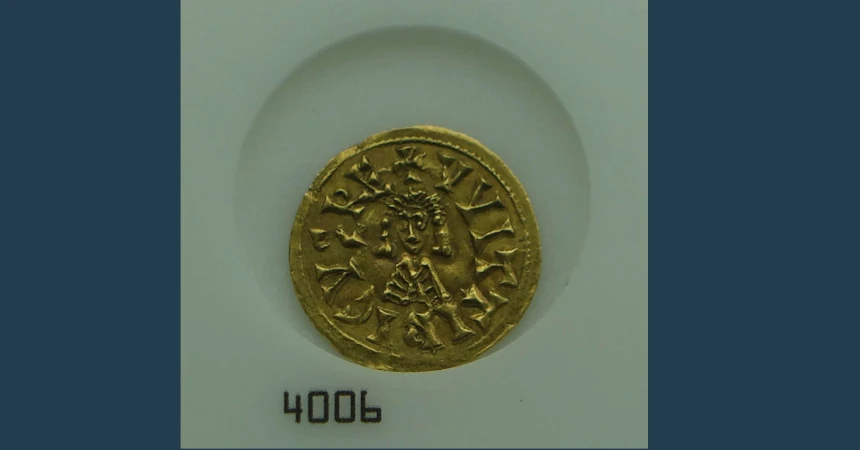
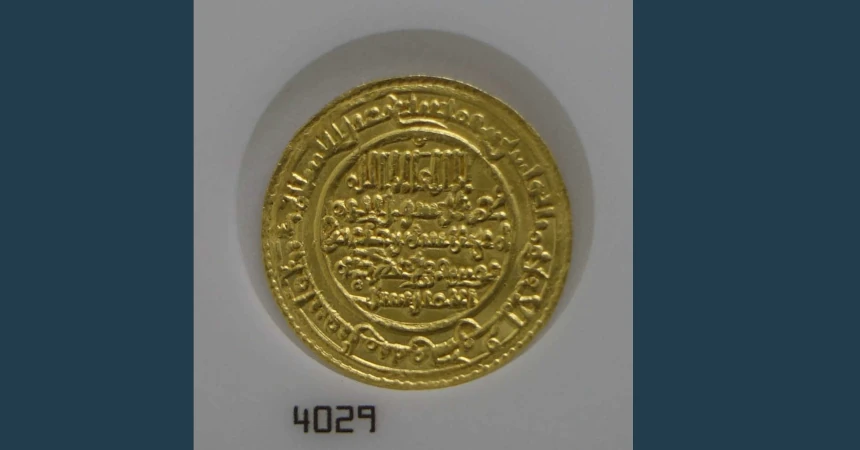
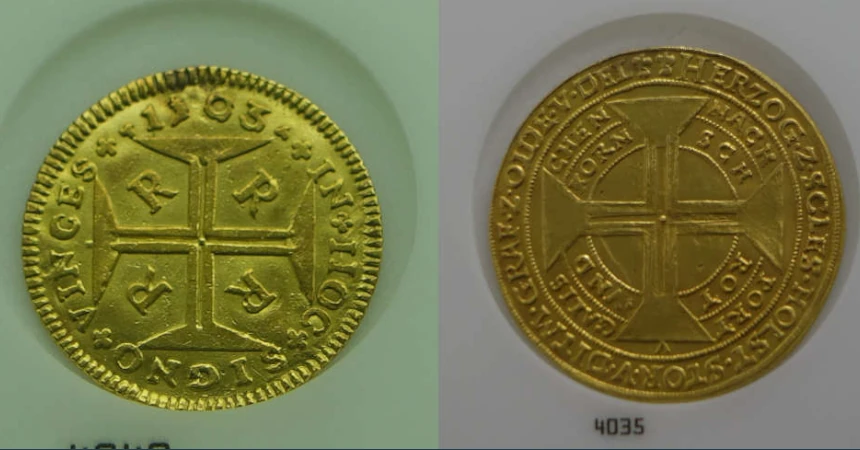
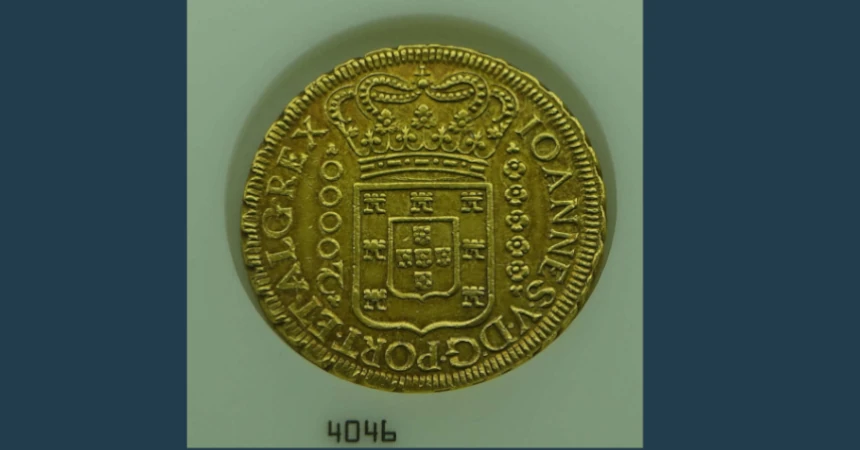
Sometimes people forget that visitors do not come to a museum to play with computers, but to see fascinating objects. This is not the case at the Museu do Dinheiro! On the contrary. All the objects you can see on the interactive map can be found a few meters away in the so-called treasure vault. And believe me: it really is a treasure vault with a rich selection of rare coins. Only collectors or experts will be able to appreciate the true quality of these pieces. There are the most exquisite ancient issues of exceptional quality, a wealth of world rarities (for example a 10-ryo oban of 1860-1862), and of course everything related to Portuguese coinage: coins of the Visigoths, the Almoravids, evidence of the entire history of the portugaleser including its many early North German imitations, and then, of course, at the center the coins of the Portuguese kings, plus a large selection of bars made of Brazilian gold and much, much more.
Bring plenty of time! Taking a close look is definitely worth it!
Portuguese Monetary History
While few visitors will realize how incredible the exhibits in the treasure vault are, the exhibition on Portuguese monetary history is rather amusing, full of stories and appealing to the general public. And the material is so well prepared that even specialists can learn a lot.
For example, have you ever heard of Artur Alves dos Reis? You may well think of him as one of the greatest counterfeiters of his time. In 1925, he caused a crisis that became internationally known as the Portuguese Bank Note Crisis.
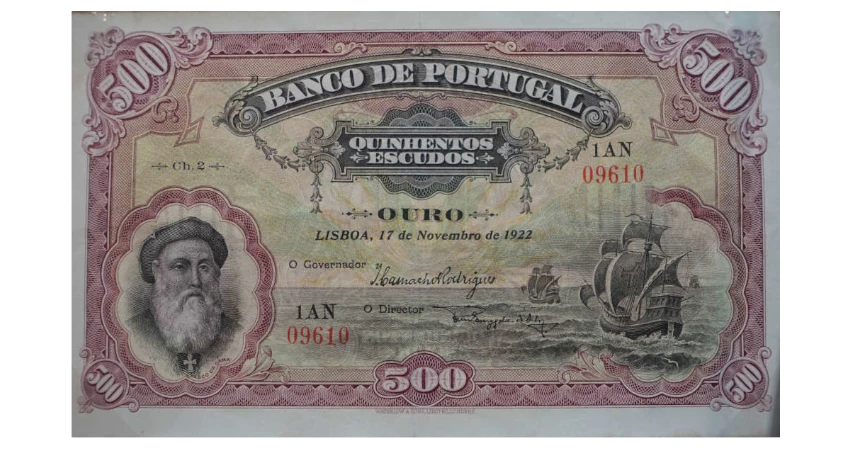
Artur Alves dos Reis actually started by forging a single document – a contract on behalf of the Banco de Portugal. This document allowed him to have banknotes printed because the consortium he represented had supposedly granted a large loan for the development of Angola. The reason this coup succeeded was that the Banco de Portugal had a very bad reputation at home and abroad for its loose monetary policy. That’s why people believed Artur Alves dos Reis when he claimed that the Banco de Portugal had insisted on secrecy and had not informed the public about the secret increase in the money supply. The famous banknote printer Waterlow and Sons Ltd. fell victim to Artur Alves dos Reis’s scheme and printed a “second issue” of Portuguese banknotes for him with printing plates that had already been used in the past. In this way, 200,000 banknotes of 500 Portuguese escudos with a total value of 100 million were printed. At the time, that was almost one percent of the Portuguese gross national product. When the money was introduced into the Portuguese economy by Artur Alves dos Reis and his partners, it caused an economic boom. The group made enormous profits, and invested some of the money to buy shares in the Banco de Portugal. This would have allowed them to legalize their fraud.
But other businessmen became suspicious. They suspected a German scheme behind this. They thought the German government was trying to buy important Portuguese companies. A newspaper sent journalists to investigate, and to their surprise they found out that it wasn’t the German government, but the famous young entrepreneur Artur Alves dos Reis who was behind the scheme. By the end of 1925, the fraud was exposed and all counterfeit banknotes were declared invalid. This economic disaster was a devastating blow to the reputation of the First Portuguese Republic. Today, it is debated whether and to what extent the banknote crisis facilitated António de Oliveira Salazar’s rise to power.
How Is Money Produced?
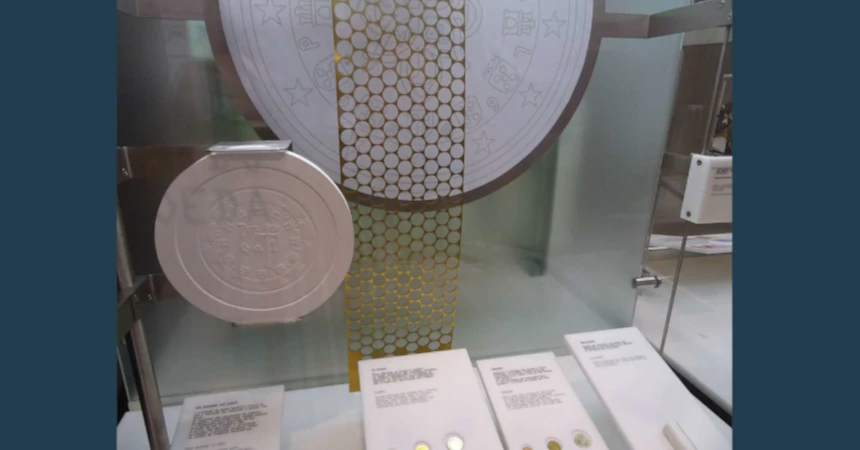
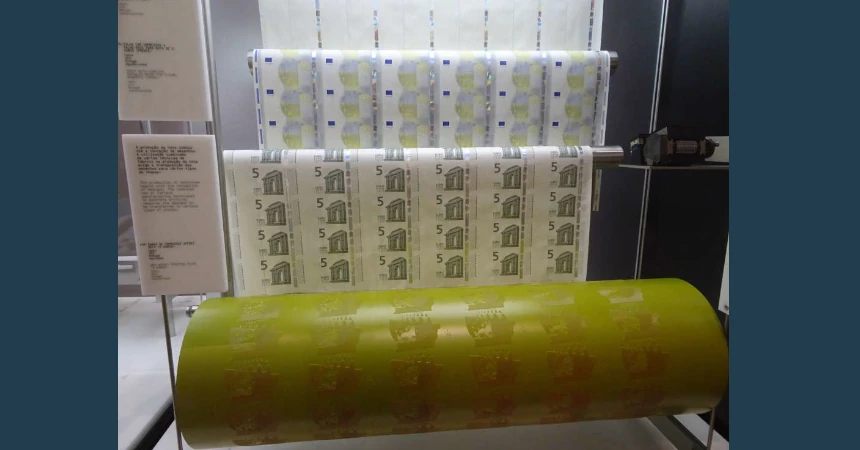
There is one thing we have not yet talked about on our journey through the world of money – the production of money. An entire hall is dedicated to this topic. It displays many interesting tools and semi-products from the past and present. You will find coining dies and punches just like a guilloche machine, which was used in the past to create the fine lines on banknotes.
Finally, there is again a bit of theory. In a small room, there are several computers that allow visitors to play central banker. In this way, you can learn what monetary policies cause inflation and what policies lead to a stable currency.
By the way, do not miss out on exploring the basement, where you can see part of the city wall built by King Dinis (1279-1325).
And before you leave the exhibition, you can touch an actual standard gold bar at the ticket office. This is very appropriate for a museum on Portuguese money. During the Estado Novo, the Banco de Portugal relied on a strict gold standard. This has resulted in Portugal having huge gold reserves to this day. Internationally, Portugal is the country with the 14th largest gold reserves after the USA, Germany, the International Monetary Fund, Italy, France, Russia, China, Switzerland, India, Japan, the Netherlands, Turkey, the ECB, Poland and Taiwan.
Last but not least: Visit the museum shop! It has a rich selection of numismatic souvenirs.